Low Testosterone Symptoms - HRT for Men in Columbus, GA

Lauren Hodge - MSN, FNP-C

Low energy, reduced motivation, changes in sex drive, and difficulty maintaining muscle mass are concerns many men quietly deal with for months or even years. In some cases, those changes may be connected to low testosterone symptoms and hormone imbalance rather than stress or aging alone.
Testosterone plays an important role in physical health, sexual function, mood, body composition, and overall well-being. When testosterone levels drop too low, men may notice changes that affect work performance, workouts, relationships, and confidence.
At Selah Aesthetics & Wellness in Columbus, GA, hormone replacement therapy for men is approached with careful evaluation, honest guidance, and personalized care. Understanding what low testosterone looks like, what causes it, and how treatment options work can help you decide whether it is time to have a professional conversation about your symptoms.
What You'll Learn From This Article
- Common low testosterone symptoms men often ignore at first
- How testosterone affects energy, muscle mass, sexual health, and mood
- What causes testosterone deficiency and male hypogonadism
- How blood testing and hormone evaluations work
- Treatment options for low testosterone, including testosterone replacement therapy
- Important safety considerations and who may not be a candidate for HRT
- What to expect from a hormone consultation at Selah Aesthetics & Wellness in Columbus, GA
What Is Low Testosterone?
Testosterone is the primary male sex hormone. It helps regulate several important functions throughout the body, including:
- Sex drive and sexual desire
- Sperm production
- Muscle strength and muscle mass
- Bone density
- Red blood cell production
- Body hair growth
- Mood and cognitive function
The body mainly produces testosterone in the testicles, while the pituitary gland and hypothalamus help control hormone signaling and production.
Low testosterone, also called testosterone deficiency or male hypogonadism, happens when the body does not produce enough testosterone to support normal function. According to the National Center for Biotechnology Information's overview of male hypogonadism, diagnosis involves both symptoms and confirmed low blood levels of testosterone.
Testosterone levels naturally change with age, but symptoms should not automatically be dismissed as simply “getting older.” Understanding how testosterone affects the body makes it easier to recognize when something feels different.
Common Low Testosterone Symptoms in Men
The signs and symptoms of low testosterone often develop gradually. Many men assume they are simply tired, stressed, or not recovering the same way they used to.
Before discussing treatment options, it helps to understand how low testosterone symptoms can show up physically, emotionally, and sexually.
Sexual Symptoms of Low Testosterone
One of the most common concerns men notice is a change in sexual function or sexual desire.
Symptoms of low testosterone may include:
- Low sex drive
- Reduced interest in sex
- Erectile changes
- Fewer spontaneous erections
- Fertility concerns related to sperm production
Testosterone helps support libido and erectile function, but hormone levels are only one piece of the picture. Sleep quality, stress, medications, relationship dynamics, and medical conditions can also affect sexual health.
Physical Symptoms of Low Testosterone
Low testosterone levels may also affect body composition and physical performance over time.
Men with low testosterone may notice:
- Fatigue or reduced stamina
- Loss of muscle mass
- Reduced muscle strength
- Increased body fat
- Slower exercise recovery
- Lower endurance
- Decreased body hair growth
According to the NCBI review on testosterone deficiency, testosterone plays an important role in maintaining muscle mass, bone density, and metabolic health.
Emotional and Cognitive Symptoms
Hormones can also influence emotional wellness and mental clarity.
Some men with low testosterone report:
- Irritability
- Difficulty concentrating
- Reduced motivation
- Mood changes
- Symptoms of depression
- Mental fatigue
These symptoms are not unique to low testosterone, which is why proper evaluation matters before starting any treatment.
Why Low Testosterone Happens
Low testosterone in men can develop for several reasons. In some cases, the issue starts in the testicles. In others, the pituitary gland or hypothalamus may not properly regulate hormone production.
Understanding the causes of low testosterone helps create a more personalized treatment plan.
Common Causes of Low Testosterone
Several factors may contribute to lower testosterone levels, including:
| Possible Cause | How It May Affect Testosterone |
|---|---|
| Aging | Testosterone levels may gradually decline over time |
| Obesity | Increased body fat may affect hormone balance |
| Sleep apnea | Poor sleep can interfere with hormone regulation |
| Chronic stress | Elevated stress hormones may impact testosterone production |
| Diabetes and metabolic conditions | May contribute to decreased testosterone |
| Certain medications | Some medications can lower testosterone levels |
| Pituitary gland disorders | Can disrupt hormone signaling |
| Testicular injury or illness | May reduce testosterone production |
Research published through PubMed Central also notes connections between obesity, metabolic health, and lower testosterone levels.
Not every man with fatigue or weight gain has testosterone deficiency. Symptoms can overlap with many health and lifestyle concerns, which is why lab testing and medical evaluation are important.
How Low Testosterone Is Diagnosed
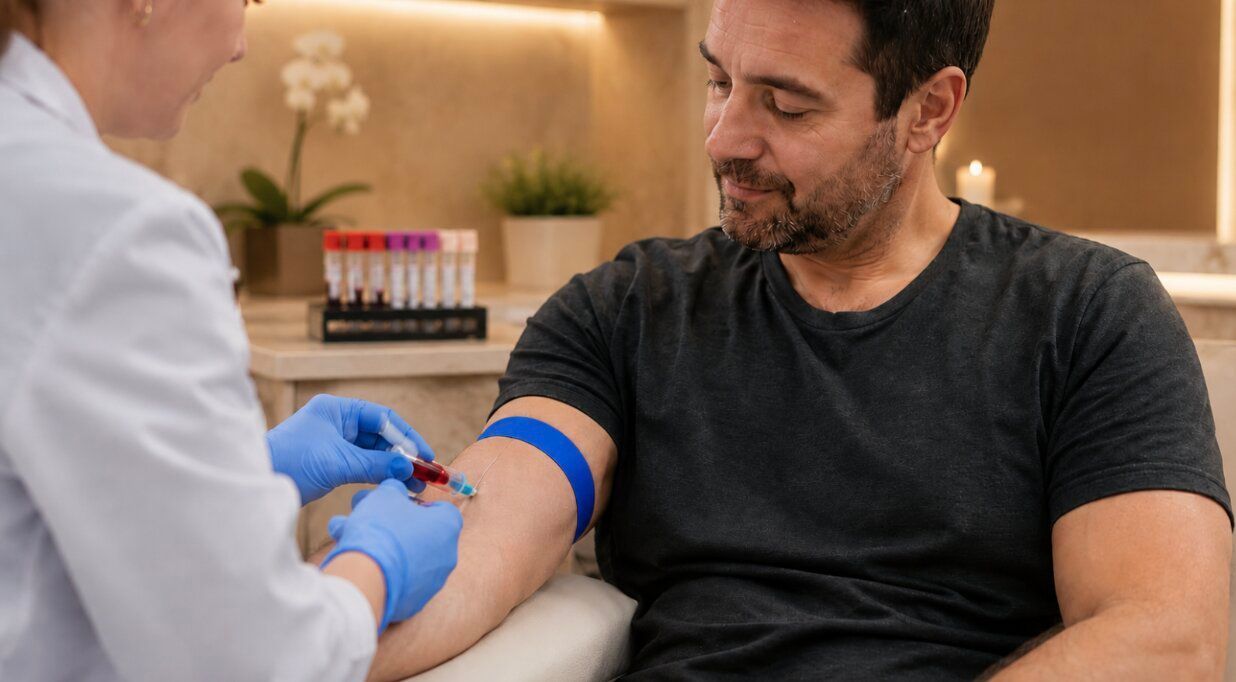
Online marketing often makes testosterone therapy sound simple, but proper diagnosis involves much more than checking one lab number.
A thorough hormone evaluation helps determine whether symptoms may actually be related to low testosterone.
Why Blood Testing Matters
Testosterone levels fluctuate throughout the day, which is why providers typically recommend early morning blood testing.
According to the NCBI clinical guidance on male hypogonadism, diagnosis generally requires:
- Symptoms consistent with testosterone deficiency
- Two separate low testosterone blood tests
Many guidelines use a total testosterone level below approximately 300 nanograms per deciliter as part of diagnostic criteria, though interpretation varies by person and laboratory standards.
Additional testing may include:
- Free testosterone
- Complete blood count
- PSA testing when appropriate
- Thyroid markers
- Prolactin levels
- LH and FSH hormone testing
- Metabolic lab work
Testing helps providers rule out other medical conditions and determine whether testosterone replacement therapy may be appropriate.
Treatment Options for Low Testosterone
Not every man with low testosterone symptoms needs hormone replacement therapy. Treatment decisions should consider symptoms, blood work, health history, fertility goals, and lifestyle factors.
Once low testosterone is confirmed, providers can discuss which form of testosterone therapy may fit best.
Common Forms of Testosterone Therapy
Several treatment options for low testosterone are available.
| Treatment Type | Description | Considerations |
|---|---|---|
| Testosterone injections | Testosterone delivered on a scheduled basis through injections | Requires ongoing maintenance and monitoring |
| Testosterone gel | Applied daily to the skin | Requires careful handling to avoid transfer to others |
| Testosterone pellets | Pellets placed beneath the skin during an office visit | May last several months before replacement |
Different forms of testosterone work better for different patients depending on lifestyle, preferences, and medical history.
What Results May Look Like
Men receiving testosterone replacement therapy may notice gradual changes in:
- Energy levels
- Sexual desire
- Exercise recovery
- Muscle strength
- Mood and motivation
Response times vary by person. Some improvements may develop within weeks, while others can take several months.
Hormone therapy should always include ongoing medical supervision and follow up lab testing.
Who May Not Be a Good Candidate for Testosterone Therapy
Testosterone replacement therapy is not appropriate for everyone. Certain medical concerns may require additional evaluation before treatment begins.
Safety and long term monitoring should always be part of the conversation.
Important Safety Considerations
Some men may not be good candidates for testosterone therapy if they have:
- Untreated sleep apnea
- Elevated red blood cell counts
- Certain prostate related concerns
- Recent cardiovascular events
- Fertility goals involving sperm production
Men trying to conceive should discuss fertility carefully with their provider. Testosterone therapy can reduce sperm production in some cases.
Treatment is also not generally recommended for men who have normal testosterone levels without symptoms.
What to Expect From HRT for Men at Selah Aesthetics & Wellness

At Selah Aesthetics & Wellness, hormone care is designed to feel personal, supportive, and medically guided. Many men come in unsure whether their symptoms are related to hormones, stress, sleep, aging, or a combination of factors.
The first step is understanding the full picture rather than rushing into treatment.
Your Hormone Consultation
A consultation may include:
- Discussion of symptoms and health history
- Review of medications and lifestyle factors
- Blood work recommendations
- Conversation about goals and expectations
- Guidance on treatment options and monitoring
Our team focuses on honest recommendations and realistic treatment planning. Some patients may benefit from testosterone therapy, while others may need additional wellness support, lifestyle changes, or further medical evaluation.
Men throughout Columbus and nearby communities often appreciate having a provider who explains what is worth addressing first and what may not be necessary.
Lifestyle Habits That Support Testosterone Health

Hormone balance is influenced by more than one factor. Lifestyle habits can affect testosterone levels, energy, body composition, and overall health.
Even when testosterone replacement therapy is appropriate, healthy routines still matter.
Daily Habits That May Support Hormone Health
Healthy habits may include:
- Prioritizing consistent sleep
- Strength training regularly
- Maintaining a healthy weight
- Managing stress
- Limiting excessive alcohol intake
- Eating balanced meals with enough protein
- Addressing sleep apnea when present
- Staying physically active
These habits can support overall wellness and may also improve energy, recovery, and metabolic health.
When Men in Columbus Should Ask About Low Testosterone Testing
Many men wait until symptoms become difficult to ignore before asking questions about hormone health.
Persistent symptoms deserve attention, especially when they begin affecting quality of life, relationships, or confidence.
Signs It May Be Time for an Evaluation
It may be worth discussing hormone testing if you notice:
- Ongoing fatigue
- Low sex drive
- Erectile changes
- Loss of muscle mass
- Increased body fat
- Mood changes
- Reduced motivation
- Poor exercise recovery
- Fertility concerns
A proper evaluation can help determine whether symptoms may be related to low testosterone, lifestyle factors, sleep issues, or another medical condition.
Conclusion
Low testosterone symptoms can affect much more than energy levels. Testosterone plays an important role in sexual function, muscle mass, mood, bone density, and overall well-being.
Understanding the causes of testosterone deficiency, how testing works, and what treatment options involve can help men make informed decisions about their health.
At Selah Aesthetics & Wellness in Columbus, GA, hormone replacement therapy is approached with personalized care, careful evaluation, and realistic guidance. If symptoms have been affecting how you feel day to day, scheduling a consultation may help you better understand your options and decide on the next step that feels right for your goals.
FAQs
1. What are the most common low testosterone symptoms?
Common low testosterone symptoms include low sex drive, fatigue, reduced muscle mass, increased body fat, erectile changes, mood changes, and lower motivation.
2. How do doctors diagnose low testosterone?
Providers diagnose low testosterone using symptom evaluation and blood testing. Most medical guidelines recommend two early morning blood tests showing low testosterone levels along with symptoms of testosterone deficiency.
3. Can low testosterone affect fertility?
Yes. Low testosterone and male hypogonadism may affect sperm production and fertility. Testosterone therapy itself can also reduce sperm count in some men.
4. Is testosterone replacement therapy safe?
Testosterone replacement therapy may be appropriate for certain men when medically supervised. Providers should review health history, lab work, fertility goals, and potential risks before treatment begins.
5. When should I ask about low testosterone symptoms?
It may be time to discuss hormone testing if symptoms like fatigue, low sex drive, reduced muscle strength, mood changes, or erectile concerns continue despite healthy lifestyle habits.

Lauren Hodge, MSN, FNP-C, is a board-certified Family Nurse Practitioner and aesthetic injector in Columbus, GA, with advanced training in regenerative medicine and aesthetics. She combines her background in pediatrics, pain management, and orthopedics with a passion for natural results, helping patients look and feel their best.
Share This Blog