7 Reasons Hair Shedding Happens After Stopping GLP-1

Editorial Team - MSN, FNP-C
Last Updated: November 17, 2026
Quick Summary
Hair shedding after stopping GLP-1 medication is usually a temporary type of hair loss called telogen effluvium, triggered by rapid weight loss and the metabolic stress of changing your body. More hairs than usual enter the resting phase together and fall out weeks later, but this shedding usually settles on its own.
- Sudden, widespread shedding weeks after a trigger points to telogen effluvium; gradual thinning suggests pattern hair loss.
- See a dermatologist if shedding lasts longer than six months, comes with scalp pain or itching, or shows patchy bald spots.
- Low iron, low protein, and low vitamin D can all push more hair into the shedding phase.
- A hair-loss evaluation typically starts with medical history and a physical exam, then a scalp exam and possible blood tests.
- Ask your provider what each test is meant to rule out before agreeing to a long lab panel.
Table of Contents
- Why Hair Shedding Happens After Stopping GLP-1 Medication
- How Long Does Telogen Effluvium Last After GLP-1?
- Hair Regrowth After Weight Loss: What to Expect
- Nutritional Deficiencies and Hair Shedding
- When to See a Dermatologist for Hair Loss
- What Happens During a Hair-Loss Medical Evaluation
- How to Prepare for a Hair-Loss Consultation in Columbus, GA
- Book a Consultation at Selah Aesthetics and Wellness
- Frequently Asked Questions
Why Hair Shedding Happens After Stopping GLP-1 Medication
Hair shedding after stopping GLP-1 medication is a temporary type of hair loss that often follows rapid weight loss and the stress of changing your body's metabolism. Below, we explain the seven reasons it happens, how long it lasts, and when to get help. (Source: American Academy of Dermatology on telogen effluvium)
Most people notice more hair in the shower drain or on their brush weeks to months after their last dose. That timing is not random.
The Hair Growth Cycle and Telogen Effluvium
Telogen effluvium is a temporary shedding condition where more hairs than usual enter the resting phase of the growth cycle at the same time. Your hair cycles through growth, transition, rest, and shedding.
Rapid weight loss, reduced calorie intake, and the metabolic shift from stopping a GLP-1 drug can all trigger this shift.
Sudden Versus Gradual Hair Loss
Sudden, widespread shedding that starts weeks after a trigger points toward telogen effluvium. Gradual thinning over years, a receding hairline, or thinning at the crown points more toward pattern hair loss driven by genetics.
Watch for the difference:
- Sudden shedding: handfuls of hair, diffuse thinning, starts weeks after a trigger
- Gradual thinning: slow change over months or years, often follows a family pattern
- Patchy loss: smooth bald spots, which can signal alopecia areata and needs a doctor's look
How Long Does Telogen Effluvium Last After GLP-1?
The duration of telogen effluvium varies from person to person, and some cases run longer, especially if nutrition stays poor or another stressor hits.
The rate of hair loss usually peaks a few months in, then slows. If you want a closer look at the timeline, read our guide on telogen effluvium recovery to see what to expect month by month.
Hair Regrowth After Weight Loss: What to Expect
Hair regrowth after weight loss follows the same pattern as recovery from any telogen effluvium episode. Regrowth timelines vary, and fine new hairs may appear once shedding slows.
What helps:
- Keep protein intake steady
- Avoid crash dieting after stopping the medication
- Treat any underlying deficiency
What most guides miss is that regrowth is slow by design. Visible change takes time because hair grows gradually.
Nutritional Deficiencies and Hair Shedding
Nutritional deficiencies and hair shedding are closely linked, and weight loss diets are a common culprit. Low iron, low protein, and low vitamin D can all push more hair into the shedding phase.
If your shedding continues, ask your provider to check your iron levels. Our article on signs iron levels are causing hair shedding walks through the symptoms worth tracking.
When to See a Dermatologist for Hair Loss
See a dermatologist for hair loss when shedding lasts longer than six months, comes with scalp pain or itching, or shows patchy bald spots. Consider a medical evaluation if you have a family history of early hair loss or other symptoms like fatigue.
Red Flags That Need Prompt Evaluation
Some signs should not wait:
- Patchy bald spots or a widening part that keeps growing
- Scalp redness, scaling, or pain
- Shedding that continues past six months
If any of these apply, our team can help you decide whether a medical evaluation makes sense. You can read more on sudden hair thinning and medical evaluation.
What Happens During a Hair-Loss Medical Evaluation
A hair-loss medical evaluation usually starts with your medical history and a physical examination, then moves to a scalp examination and possible blood tests.
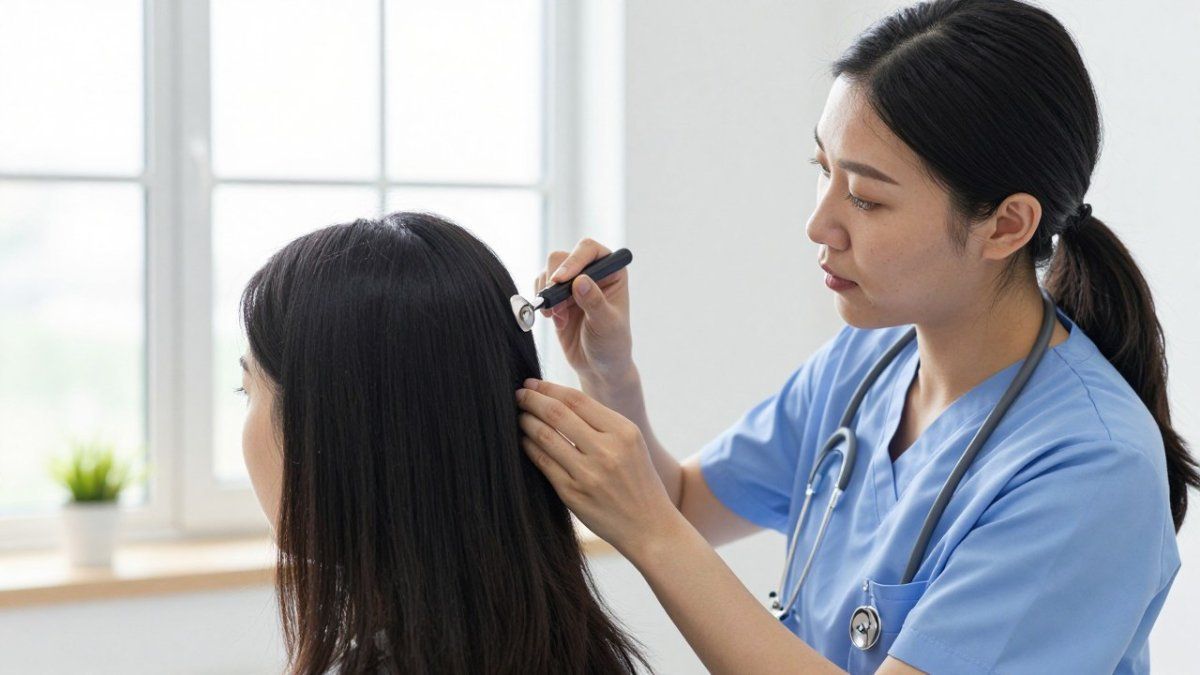
Step 3: Hair-Pull Test and Pattern Assessment
The hair-pull test is a quick clinical check in which a provider grasps a small section of hair and gives a gentle tug to assess active shedding. Pattern assessment then sorts the loss into diffuse shedding (telogen effluvium), patterned thinning at the part or crown (androgenetic alopecia), or patchy smooth spots (alopecia areata).
Step 4: Dermoscopy and Biopsy, When Indicated
Dermoscopy uses a handheld magnifier to look at hair shafts and scalp skin up close. It can distinguish telogen effluvium from early pattern hair loss and can show the exclamation-point hairs and yellow dots seen in alopecia areata. A scalp biopsy is reserved for cases where scarring alopecia or another scalp disease is suspected; it is not routine for typical post-GLP-1 shedding.
Diagnostic Tests and Their Limitations
Blood tests can find iron deficiency, thyroid disease, and hormonal changes, but they do not explain every case. Common labs include ferritin (iron stores), a complete blood count, thyroid-stimulating hormone, and vitamin D; hormone panels may be added when the history suggests a hormonal driver. No single test confirms telogen effluvium, so the diagnosis often rests on history and pattern.
What to Ask Before You Agree to Testing
- What diagnosis are we trying to confirm or rule out with this test?
- Will the result change the treatment plan?
- How long until results come back, and who reviews them with me?
Watch out: a long lab panel ordered without a clear question can produce borderline results that trigger more tests without changing your care. Ask your provider to connect each test to a specific finding from your history or scalp exam.
Here is the typical sequence of a hair-loss evaluation and what each step is looking for.
| Step | What happens | What it looks for |
|---|---|---|
| Medical history | Medications, GLP-1 stop dates, weight change, diet, family history | Lines up trigger versus shedding timeline |
| Physical and scalp exam | Checks thyroid and iron signs, density, part width, scalp symptoms | Systemic causes and scarring signs |
| Hair-pull test and pattern assessment | Gentle tug on a small hair section | Diffuse, patterned, or patchy loss classification |
| Dermoscopy and biopsy, when indicated | Handheld magnifier; biopsy reserved for suspected scarring | Distinguishes telogen effluvium from pattern loss |
| Diagnostic tests | Ferritin, complete blood count, TSH, vitamin D; hormone panels if suggested | Iron deficiency, thyroid disease, hormonal changes |
How to Prepare for a Hair-Loss Consultation in Columbus, GA
Preparing for a hair-loss consultation takes a few minutes and can make the visit more useful. Bring the right details and you help your provider reach the right diagnosis faster. This section covers the local pathway, the checklist, and the logistics most guides skip.
Who to Contact First in Columbus, GA
Dermatology is the specialty that handles scalp and hair disorders, so consider starting there if an appointment is available. A primary-care provider or nurse practitioner may also be able to begin an initial evaluation while you wait. If you are looking for a hair loss evaluation in the Columbus area, call ahead to ask about scalp examination and lab ordering.
What to Ask When You Schedule
- Is a referral required by my insurance plan, or can I book directly?
- What is the consultation fee, and what does it cover?
- Will lab work be billed separately, and is it covered?
Costs vary by practice and plan, so ask about pricing and coverage before you book. A referral may be needed for dermatology under some plans, and a primary-care visit is often the fastest route to initial labs while you wait for a specialist.
Appointment Preparation Checklist
- List all medications, including GLP-1 drugs and stop dates
- Note when shedding started and how much you notice daily (count hairs on the brush or in the shower drain for a few days)
- Track recent weight change and diet changes, including protein intake
Urgency and Red Flags: When Not to Wait
Most post-GLP-1 shedding is diffuse and gradual, and it can wait for a routine appointment. Some signs need prompt evaluation instead:
- Rapidly developing bald patches, especially smooth round spots
- Scalp pain, burning, redness, or pus
- Smooth, shiny scalp patches that suggest scarring alopecia
If any of these apply, call a provider promptly rather than waiting for a routine slot. Our team can help you decide whether a medical evaluation makes sense, and you can read more on sudden hair thinning and medical evaluation.
What to Bring and What to Expect on the Day
Bring your medication list, the timeline you wrote down, any prior labs, and photos. Expect a conversation about history, a scalp examination, possibly a hair-pull test, and a discussion of whether labs or dermoscopy are worth doing.
Watch out: booking a consultation that only sells supplements or treatments without examining your scalp or reviewing your history can waste money and delay a real diagnosis. Ask what the visit includes before you pay.
Book a Consultation at Selah Aesthetics and Wellness
Hair shedding after a GLP-1 journey can be stressful, and it is often temporary. A medical evaluation is a reasonable first step.
At Selah Aesthetics and Wellness, Lauren Hodge, MSN, FNP-C, is a board-certified Family Nurse Practitioner.
Selah Aesthetics and Wellness offers medical weight loss support and personalized wellness plans. If you are local, you can also read our guide on medical weight loss and hair loss support to see how the pieces connect.
If your shedding has lasted for months and you are tired of guessing, get a real answer. Explore our hair restoration options and book a consultation to build a plan that fits your goals.
Frequently Asked Questions
Can hair shedding continue after stopping a GLP-1 medication?
Yes, shedding can continue for weeks or months after you stop the medication. Shedding is sometimes associated with rapid weight loss and the stress that puts on the hair growth cycle. Shedding timelines vary from person to person. If shedding lasts longer than six months, gets worse, or comes with scalp irritation, book an evaluation with a dermatologist or a qualified provider in Columbus, GA.
How long does telogen effluvium last after stopping a GLP-1?
Telogen effluvium often resolves once the trigger passes, though the timeline varies from person to person. The timeline depends on how much weight you lost, how fast, and whether nutritional deficiencies are also in play. Track the rate of hair loss and the duration of symptoms so your provider can tell whether this is normal recovery or something that needs testing.
Will my hair grow back after GLP-1-related hair loss?
In most cases of telogen effluvium, hair regrowth begins once the trigger resolves and your hair growth cycle normalizes. Regrowth patterns vary, and a provider can help explain what to expect for your situation. If you have pattern hair loss, thyroid disease, or iron deficiency, regrowth may need targeted treatment. A scalp examination and blood tests help your provider separate temporary shedding from an underlying condition.
Should I restart or change my GLP-1 medication if my hair is shedding?
Do not restart, stop, or change a GLP-1 medication on your own. Talk to the prescriber who manages your weight loss plan. Hair shedding after stopping GLP-1 medication can have several contributing factors, so discuss your options with the prescriber and a qualified provider. Your prescriber and a hair-loss provider can coordinate a plan that protects both your weight goals and your hair.

Lauren Hodge, MSN, FNP-C, is a board-certified Family Nurse Practitioner and aesthetic injector in Columbus, GA, with advanced training in regenerative medicine and aesthetics. She combines her background in pediatrics, pain management, and orthopedics with a passion for natural results, helping patients look and feel their best.
Share This Blog