How Do You Prepare for a First Laser Hair Removal Session?

Editorial Team - MSN, FNP-C
Quick Summary
Stop waxing, sugaring, threading and tweezing about six weeks before your first laser hair removal session, since the follicle must be intact. Limit sun exposure and skip tanning beds, pause retinoids and strong acids two weeks before, and shave the area about 24 hours before your appointment.
- Stop waxing, sugaring, threading and tweezing about six weeks before treatment.
- Avoid tanning beds and sunless tanners on the treatment area before your session.
- Pause retinoids, scrubs, peels and strong acids about two weeks before treatment.
- Shave the treatment area about 24 hours before your appointment, not the morning of.
- Disclose all medications, supplements and recent isotretinoin use to your provider.
Table of Contents
- Why Preparation Changes Your First Laser Hair Removal Session
- Your Timeline: What to Do in the Weeks Before Treatment
- Shaving Before Laser Hair Removal: When and How
- What to Avoid: Sun, Tanning, Waxing and Irritating Products
- What to Expect at Your First Laser Hair Removal Session
- Preparing for a Brazilian Laser Hair Removal Appointment
- Caring for Your Skin After Laser Hair Removal and Booking Your Consultation
- Frequently Asked Questions
Why Preparation Changes Your First Laser Hair Removal Session
Last Updated: November 21, 2026
Preparing for a first laser hair removal session is one of the easiest ways to get better results. Clients who prepare well often have smoother, more comfortable first visits.
Laser hair removal works by sending light energy into the hair follicle. Readers choosing among laser options for dark hair can compare which lasers suit their hair type in this guide to the best laser hair removal options for dark hair.
Here is the short version:
- Avoid sun exposure and tanning before your session
- Shave the treatment area the right amount of time before your appointment
- Stop waxing, tweezing and other methods that remove the root
- Pause irritating skincare products as directed
The rest of this guide walks through each step so you know what to do, and when.
Your Timeline: What to Do in the Weeks Before Treatment
Start preparing about two to six weeks before your first session. Timing matters more than most people expect, and seasonal sun is part of the calculation. A July appointment means stronger midday UV and more time outdoors, while a January appointment usually means less incidental sun exposure. Either way, the goal is the same: arrive with skin that is calm, untanned and free of products that can interfere with the laser.
Use this timeline as a working checklist. Adjust it if your provider gives you different instructions.
Six weeks before:
- Stop waxing, sugaring, threading and tweezing the treatment area. The follicle needs to be intact when the laser fires.
- Limit sun exposure and skip tanning beds entirely. If you are outdoors in Columbus, wear broad-spectrum sunscreen and protective clothing on the treatment area.
- Review your current skincare routine for retinoids, exfoliating acids and any prescription topicals.
- Book your appointment early enough that you have room to adjust your routine.
Two weeks before:
- Pause retinoids, scrubs, chemical peels and strong acids on the treatment area, unless your provider tells you otherwise.
- Check that your skin is not sunburned, peeling or irritated. A recent sunburn is a reason to call the clinic, not to push through.
- Write down your medications, supplements and health history so you are not reconstructing it in the room.
- Skip self-tanner on the treatment area. Artificial color can change how the laser interacts with your skin.
24 hours before:
- Shave the treatment area if you have not already done so. Short hair above the skin is what you want; stubble is fine.
- Keep the skin clean and free of lotions, oils, deodorant and self-tanner.
- Avoid harsh scrubs or new products that could leave the skin red.
Day of your appointment:
- Arrive with clean, product-free skin on the treatment area.
- Bring a list of your medications and any questions you wrote down.
- Wear loose, comfortable clothing if the treatment area is under clothing.
- Eat and hydrate normally unless your provider says otherwise.
Many people find it helpful to keep this checklist on their phone and set reminders at the six-week, two-week and 24-hour marks.
Watch out: if you are sunburned, recently waxed, or using a prescription topical on the treatment area, contact the clinic before your appointment.
Here is a quick summary of when to do each preparation step before your first session.
| Timing | What to do | Why |
|---|---|---|
| Six weeks before | Stop waxing, sugaring, threading and tweezing | Follicle must be intact for the laser |
| Six weeks before | Limit sun and skip tanning beds | Tanned skin changes how the laser reacts |
| Two weeks before | Pause retinoids, scrubs, peels and strong acids | Irritated skin can react more strongly |
| Two weeks before | Skip self-tanner on the treatment area | Artificial color can change laser interaction |
| 24 hours before | Shave the treatment area | Short hair above skin reduces surface heat |
| 24 hours before | Keep skin free of lotions, oils and deodorant | Clean skin is ready for treatment |
| Day of appointment | Arrive with clean, product-free skin | Ensures the provider can treat safely |
Shaving Before Laser Hair Removal: When and How
Shaving is one of the most important steps before laser hair removal. Keeping the hair above the skin short helps the laser focus on the follicle, and The Laser Club Spa offers further preparation advice for making the session more comfortable.
When to shave:
- Shave about 24 hours before your appointment
- Do not shave on the morning of the session if your skin is sensitive
How to shave safely:
- Use a clean, sharp razor
- Shave in the direction of hair growth
- Use a gentle, fragrance-free shaving cream
- Rinse the area with cool water and pat it dry
A common mistake is shaving too close to the session and leaving nicks or redness. Irritated skin may not be ready for treatment, so ask your provider if you are unsure.
What to Avoid: Sun, Tanning, Waxing and Irritating Products
Some habits can affect how safely and effectively your first session goes. Avoid these in the weeks before treatment.
Sun exposure and tanning:
- Avoid tanning beds and sunless tanning products on the treatment area
- Wear sunscreen and protective clothing when you are outdoors
- Let any sunburn heal before booking or keeping your appointment
Tanned or sun-darkened skin can change how the laser interacts with your skin, so providers often need to adjust settings or delay treatment.
Waxing, tweezing and other hair removal methods:
- Stop waxing, sugaring, threading and tweezing about six weeks before treatment
- Ask your provider about bleaching or hair removal creams before using them
These methods remove the hair from the follicle. The laser needs the follicle intact to target the hair effectively.
Irritating skincare products:
- Pause retinoids, exfoliating scrubs, peels and strong acids on the treatment area
- Avoid medicated washes, scented lotions and oils on the skin before the session
- Use a gentle cleanser and keep the area clean
Skin that is irritated, dry or peeling can react more strongly to laser energy.
Medications and Health History to Disclose
Your provider needs a full picture of your health before treating you. Be ready to share:
- All prescription and over-the-counter medications
- Supplements and any products that may thin the blood
- Recent isotretinoin or other retinoid use
- Any history of keloids, cold sores, autoimmune conditions or skin infections
- Pregnancy or plans to become pregnant
Some medications and skin conditions can change whether a laser session is appropriate. Share everything, even if it seems minor. Your provider will tell you if any changes are needed before treatment. Anything that concerns you about your health should also be discussed with your own healthcare provider.
What to Expect at Your First Laser Hair Removal Session
Knowing the sequence of a first visit can make the appointment feel less stressful. Most clinics follow a similar pattern, though the details vary by provider and device.
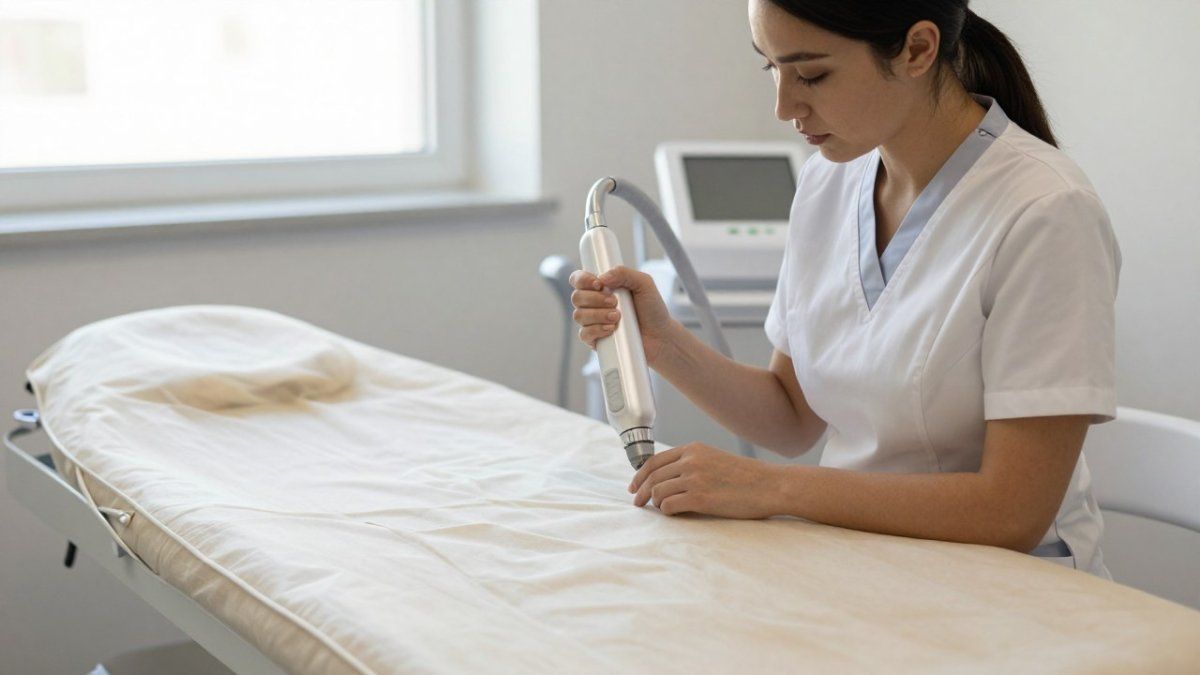
Before the laser:
- You will likely fill out intake forms covering medications, supplements, skin conditions, recent sun exposure and any history of cold sores, keloids or skin infections.
- Your provider will review your health history and look at the treatment area. They are checking hair color and thickness, skin tone, and whether the skin is calm or irritated.
- Some providers do a test patch on a small area to see how your skin responds before setting energy levels.
- You will be given protective eyewear. Keep it on for the entire treatment, including any test pulses.
During treatment:
- The provider will apply a cooling gel, a cold-air device or another comfort measure, depending on the laser.
- You may feel a quick snapping or rubber-band sensation. Most people describe it as tolerable, and the provider can usually adjust settings if it is not.
- The provider moves systematically across the treatment area. Sessions for a small area like the upper lip are short; larger areas like the back or legs take longer.
- Ask for a break at any point. A good provider will pause without making it awkward.
After the laser:
- The treated skin may look pink or feel warm for a few hours, similar to mild sunburn.
- Hair is not removed all at once. Some hair may appear to grow in the days after treatment as treated hairs shed.
- You will get aftercare instructions covering sunscreen, heat exposure and products to avoid.
- Hair grows in cycles, so multiple sessions spaced apart are commonly needed for hair removal.
Watch out: if you feel intense pain, notice blistering during or right after treatment, or develop swelling that seems out of proportion, tell your provider before you leave. Skin that becomes blistered, severely swollen or unusually painful after you get home needs prompt medical attention.
Preparing for a Brazilian Laser Hair Removal Appointment
A Brazilian laser hair removal appointment has a few extra preparation steps. The area is sensitive, and clear instructions help you feel comfortable.
Before your appointment:
- Shave the area about 24 hours before the session, as recommended above
- Avoid waxing for at least six weeks before treatment
- Skip exfoliating products, scrubs and strong acids in the area
- Wear loose, comfortable clothing to your appointment
At your appointment:
- Tell your provider about any recent irritation, rash or sunburn
- Ask for privacy and a clear explanation of each step
- Let your provider know if you need a break at any time
Preparing properly reduces irritation and helps the provider work efficiently. If you have a question about your specific area, ask your provider before the session.
Caring for Your Skin After Laser Hair Removal and Booking Your Consultation
Aftercare is part of preparation. Follow your provider's aftercare instructions closely.
Common aftercare steps include:
- Applying a cool compress to soothe the skin
- Using sunscreen daily on the treated area
- Avoiding hot baths, saunas and intense exercise for the first day
- Avoiding picking, scrubbing or waxing between sessions
If you have questions about skin changes after treatment, contact your provider. Skin that becomes blistered, severely swollen or unusually painful needs prompt medical attention.
If you are ready to get started, book a consultation with Selah Aesthetics and Wellness in Columbus, GA. Schedule your laser hair removal consultation or get in touch about booking.
Frequently Asked Questions
Should I shave before laser hair removal?
Yes, in most cases you should shave the treatment area a few hours to one day before your appointment. Shaving removes hair above the skin so the laser can reach the follicle beneath it, while the root stays in place. Do not wax, tweeze or use depilatory creams in the weeks before treatment, because those methods remove the follicle and the laser needs the hair root to work. Your provider may give specific timing instructions, so follow those if they differ.
Can I get laser hair removal if I have a tan or sunburn?
Tanned or sunburned skin is generally not treated at the first session, because pigment in the skin can absorb laser energy and increase the risk of burns, blistering and skin color changes. Avoid sun exposure, tanning beds and self-tanners before your appointment, and tell your provider about any recent tan. Skin tone and recent tanning both affect which settings are safe, so a consultation is the right place to confirm whether treatment can proceed that day.
What should I tell my provider before my first laser hair removal session?
Share a complete medical and medication history, including prescriptions, supplements, isotretinoin or other retinoids, recent or upcoming sun exposure, and any history of keloids, cold sores near the treatment area, or skin conditions. Also list any recent exfoliating products, peels, acids or irritating skincare you have used. This information helps your provider decide whether the treatment is appropriate and which precautions to take. Contact the clinic before your appointment if anything changes.
What should I do after laser hair removal?
Expect redness, mild swelling or warmth in the treated area for several hours to a few days. Apply cool compresses if comfortable, avoid sun exposure and tanning, use a gentle fragrance-free moisturizer and sunscreen as directed, and avoid hot baths, saunas, heavy exercise and harsh exfoliants for the period your provider recommends. Contact your provider if you notice blistering, unusual pain, or signs of infection.

Lauren Hodge, MSN, FNP-C, is a board-certified Family Nurse Practitioner and aesthetic injector in Columbus, GA, with advanced training in regenerative medicine and aesthetics. She combines her background in pediatrics, pain management, and orthopedics with a passion for natural results, helping patients look and feel their best.
Share This Blog