How to Check Hormone Levels With Blood Tests in Women

Editorial Team - MSN, FNP-C
Last Updated: November 22, 2026
Quick Summary
Hormone blood tests for women most commonly measure estradiol, progesterone, FSH, LH and testosterone. Together they show reproductive health, ovulation and menopause status, and the results are read against the timing of the menstrual cycle.
- Estradiol rises and falls across the menstrual cycle, so ask which cycle day your sample was drawn on.
- Progesterone is usually measured about a week before expected menstruation, when it peaks after ovulation.
- FSH is commonly checked on day 2 or 3 of a cycle, and LH is usually measured alongside it.
- Some medications, including birth control pills and hormone therapy, can affect hormone levels, so tell your provider everything you take.
- Clinicians often repeat hormone tests across one to three cycles before drawing conclusions from a single result.
Table of Contents
- What Hormone Blood Tests Measure in Women
- Female Hormone Test List: Common Panels and What Each Covers
- Choosing the Right Test Based on Symptoms and Life Stage
- Timing, Preparation and Cycle Day Considerations
- Female Hormone Blood Test Results Explained
- Female Hormone Test At-Home Options and Costs
- Booking Your Hormone Panel in Columbus, GA
- Frequently Asked Questions
What Hormone Blood Tests Measure in Women
Hormone blood tests measure how much of specific hormones is circulating in your bloodstream at the time of the draw. For women, the most commonly ordered tests look at estrogen, progesterone, follicle-stimulating hormone (FSH), luteinizing hormone (LH) and testosterone. Each one tells a different part of the story about reproductive health, ovulation and menopause.
Selah Aesthetics and Wellness in Columbus, GA believes these tests should be explained before anyone orders one, because a result only makes sense when you know what was measured and when. Hormone levels shift across the menstrual cycle, so timing matters as much as the test itself. Hormone blood tests are a useful snapshot, not a complete diagnosis.
Estrogen and Estradiol Testing
Estradiol is the main form of estrogen during the reproductive years, and it rises and falls across the menstrual cycle ( Estrogen Levels Test: MedlinePlus Medical Test). A blood test can show whether estradiol is within the reference range for your cycle phase. Clinicians often use it alongside FSH to assess ovarian function.
Estradiol results are hard to read in isolation, so ask which day of your cycle the sample was drawn on.
Progesterone Testing
Progesterone is typically measured in the second half of the cycle, roughly a week before expected menstruation, because that is when it peaks after ovulation. A low level in that window can be a helpful clue, but it is not a stand-alone diagnosis.
If you want to understand progesterone's broader role in women's hormone health, our page Progesterone: The Hormone That Isn't Talked About Enough explains how it works alongside estrogen.
FSH, LH and Testosterone Testing
FSH and LH are produced by the pituitary gland and signal the ovaries. FSH often rises as the ovaries respond less, which is why it is commonly checked on day 2 or 3 of a cycle. LH is usually measured alongside FSH, and the ratio between them can be useful in certain conditions such as polycystic ovary syndrome (PCOS).
Testosterone is present in women in small amounts. Total and free testosterone are both measured, and results are compared against reference ranges that differ for women.
Female Hormone Test List: Common Panels and What Each Covers
Most hormone panels bundle several tests together. The table below summarizes what each common panel typically includes. Panels vary by lab, so confirm the exact markers before ordering.
| Panel Type | Typical Markers | Common Reason to Order |
|---|---|---|
| Basic reproductive panel | FSH, LH, estradiol | Irregular cycles, fertility questions |
| Ovarian reserve panel | FSH, estradiol, AMH | Planning pregnancy or assessing reserve |
| Menopause panel | FSH, estradiol | Perimenopausal or postmenopausal symptoms |
| Extended female panel | FSH, LH, estradiol, progesterone, testosterone, DHEA-S | Symptom review, PCOS evaluation |
| Thyroid add-on | TSH, free T4 | Fatigue, weight or mood changes |
Choosing the Right Test Based on Symptoms and Life Stage
The right test depends on what you are experiencing and where you are in life. A woman in her late 20s with irregular periods needs a different starting point than a woman in her 50s with hot flashes. Start with your symptoms, then let your clinician narrow the panel. The table below maps common complaints to the tests a clinician may consider; it is a starting point for a conversation, not a self-diagnosis checklist.
| What you are noticing | Tests a clinician may consider first | Why |
|---|---|---|
| Irregular or missed periods, acne, excess facial hair | Total and free testosterone, LH, FSH, DHEA-S | These markers help evaluate PCOS and androgen excess |
| Hot flashes, night sweats, cycle changes in your 40s or 50s | FSH, estradiol | FSH often rises and estradiol fluctuates as ovarian function declines |
| Trouble getting pregnant or concerns about ovarian reserve | FSH, estradiol, AMH | These markers help assess ovarian reserve and response |
| Short cycles, spotting, or suspected low progesterone | Progesterone timed to the luteal phase | Progesterone peaks after ovulation and helps confirm ovulation occurred |
| Fatigue, weight change, hair thinning, feeling cold | TSH, free T4 | Thyroid disease can mimic or accompany hormone imbalance |
| Low libido, vaginal dryness, fatigue | Estradiol, total and free testosterone | These symptoms can reflect low estrogen or androgen levels |
Life stage narrows the list further. During the reproductive years, the priority is usually ovulation and cycle regularity, so FSH, LH, estradiol, and a timed progesterone are common. When pregnancy is the goal, AMH is often added to assess ovarian reserve. In perimenopause, FSH and estradiol are the workhorses, and clinicians often repeat FSH because a single value can fluctuate. After menopause, testing is usually driven by symptoms and treatment decisions rather than routine screening.
Women in perimenopause often ask whether hormone therapy is the next step. Our guide Hormone Therapy for Perimenopause in Columbus, GA covers how treatment decisions connect to testing. If mood changes are part of the picture, Hormone Therapy for Perimenopause Mood Swings: What to Know explains what to ask. Some patients also wonder whether stress affects results, and Can Stress Cause Hormonal Imbalance? What to Know addresses that question.
For a deeper look at follow-up visits after starting treatment, see 7 Perimenopause HRT Follow-Up Visits and What to Track.
Be cautious about symptom-based self-diagnosis. Fatigue, mood changes, and weight shifts have many causes, including thyroid disease, anemia, and sleep problems. Testing is most useful when it answers a specific question.
Timing, Preparation and Cycle Day Considerations
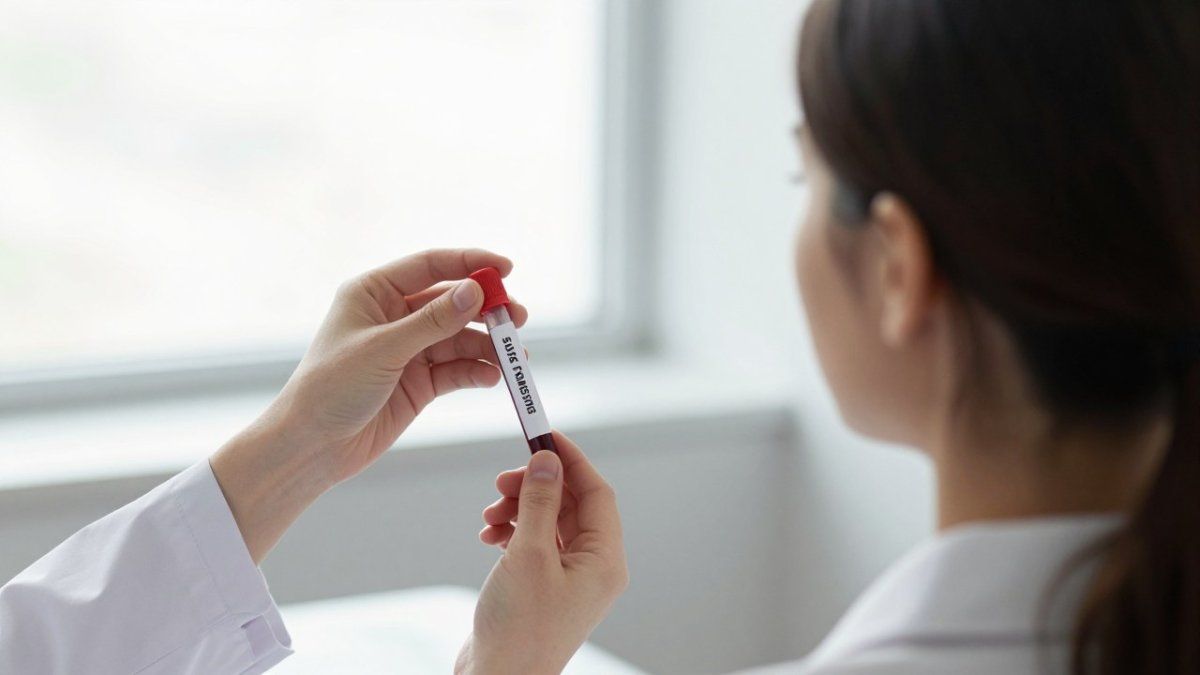
Timing can change a result more than most people expect. Estradiol and progesterone move throughout the cycle, so a test drawn on the wrong day can look abnormal even when hormone production is normal. Ask your clinician which cycle day they need before you schedule. The table below summarizes common timing conventions; your clinician may adjust them for your situation. Because cycle timing can shape how hormone results are interpreted, symptoms such as low testosterone may also be worth discussing with your clinician; PursuitofHealthyness offers another perspective on recognizing them.
| Test | Common timing | Why it matters |
|---|---|---|
| FSH and LH | Day 2 or 3 of the cycle | Early-follicular values are the standard reference point for ovarian reserve |
| Estradiol | Day 2 or 3 when paired with FSH; otherwise cycle-phase specific | Results are read against the phase of the cycle |
| Progesterone | About 7 days before expected menstruation (roughly day 21 in a 28-day cycle) | Confirms whether ovulation occurred |
| Testosterone and DHEA-S | Any day; morning draw is common | Values can vary through the day |
| TSH and free T4 | Any day; morning draw is common | Thyroid values are less cycle-dependent |
| AMH | Any day of the cycle | AMH is relatively stable across the cycle |
Time of day matters for some hormones. Testosterone and DHEA-S tend to be higher in the morning, so many clinicians prefer a morning draw and compare results drawn at similar times. Cortisol, if it is being checked, has a strong daily rhythm and is usually drawn in the morning ( Cortisol blood test: MedlinePlus Medical Encyclopedia). For most reproductive hormones, the cycle day matters more than the clock time.
Preparation matters too. Some medications, including birth control pills, hormone therapy, and certain supplements, affect hormone levels ( Estradiol blood test: MedlinePlus Medical Encyclopedia). Tell your provider everything you take, including over-the-counter products and herbal supplements. Pregnancy also changes results, so a pregnancy test is often done first when a cycle is unclear. Fasting is not usually required for hormone panels, but follow any instructions your lab provides.
Repeat testing is common. A single result is a snapshot, and many clinicians recheck within one to three cycles before drawing conclusions. Keep notes on your cycle dates and symptoms so the comparison is fair. Watch out: repeating a test on a different cycle day than the first draw can make a normal change look like a trend, so ask your clinician to keep the timing consistent when possible.
Female Hormone Blood Test Results Explained
Lab reports list a result, a reference range and sometimes a flag. The reference range is based on a population sample, and it varies between labs and by cycle phase. A result slightly outside the range is not always meaningful, while a result inside the range does not rule out a problem.
If a result is abnormal, the next step is a conversation, not panic. Your clinician will weigh the number against your symptoms, medical history and any repeat values. Abnormal results may lead to imaging, further labs or a referral to a specialist. Ask what the result means for you, what the next step is and whether a repeat test is needed.
Hormone panels also have limits. They cannot diagnose every condition, and they do not replace a physical exam or a thorough symptom history.
Female Hormone Test At-Home Options and Costs
At-home hormone test kits let you collect a sample at home and mail it to a lab. They can be convenient, but they usually offer fewer markers and less clinical follow-up than an in-office draw. Prices vary widely by lab and panel, and many kits are sold without insurance coverage.
Clinical testing, ordered by a provider, often costs less out of pocket once insurance is applied, but coverage depends on your plan and the reason for the test. Ask your insurer which tests are covered and whether a prior authorization is needed. Pricing for our own services depends on the specific tests ordered, so please contact Selah Aesthetics and Wellness directly for a current quote.
Whichever route you choose, make sure a licensed clinician reviews the results with you.
Booking Your Hormone Panel in Columbus, GA
If you are in the Columbus, GA area and want help choosing the right hormone blood tests, the first step is a consultation. At Selah Aesthetics and Wellness, Lauren, a nurse practitioner board certified in Aesthetics, reviews your symptoms, history and goals before recommending any testing.
Consultations at Selah Aesthetics and Wellness start with Selah Face Value, a head-to-toe consult. Book a consultation with Selah Aesthetics and Wellness to talk through which hormone tests make sense for you and what to expect from the results.
Frequently Asked Questions
What type of blood test can detect female hormonal imbalances?
A blood test that measures a panel of reproductive hormones, such as estradiol, progesterone, FSH, LH and testosterone, is commonly used to evaluate possible hormonal imbalance. Thyroid hormones and sometimes cortisol or DHEA-S may also be included depending on symptoms. No single test confirms an imbalance on its own. A licensed clinician reviews results alongside your symptoms, cycle history and medical background, and may order repeat testing at a specific point in your cycle before drawing conclusions.
Do hormone blood tests need to be taken on a certain day of the menstrual cycle?
Often, yes. Estradiol, progesterone, FSH and LH change throughout the menstrual cycle, so the day of testing can change what the result means. Clinicians frequently draw FSH and estradiol early in the cycle and progesterone roughly a week before expected menstruation. Testing when you are on hormonal birth control, pregnant, or recently changed medications can also affect results. Ask the ordering clinician whether your test should be timed to your cycle or taken on a specific day.
What hormones are included in a female hormone panel?
Most female hormone panels include estradiol, progesterone, follicle-stimulating hormone (FSH), luteinizing hormone (LH) and total or free testosterone. Some add DHEA-S, prolactin, thyroid hormones or insulin-like growth factor 1 (IGF-1). The right combination depends on your symptoms and life stage, such as irregular periods, fertility questions or perimenopause. Panels cannot diagnose every condition, so results should always be interpreted with a clinician who knows your history.
How should women prepare for hormone blood tests?
Confirm with the ordering clinician which day of your cycle to test, and tell them about all medications, supplements and any recent pregnancy or contraceptive use, since these can change results. Some tests are done fasting, so follow the lab's instructions for food and water. Bring a record of your cycle dates if you track them. Ask how and when results will be shared and what follow-up is planned if values fall outside the reference range.

Lauren Hodge, MSN, FNP-C, is a board-certified Family Nurse Practitioner and aesthetic injector in Columbus, GA, with advanced training in regenerative medicine and aesthetics. She combines her background in pediatrics, pain management, and orthopedics with a passion for natural results, helping patients look and feel their best.
Share This Blog