7 Preventive Skincare Habits for Long-Term Skin Health

Editorial Team - MSN, FNP-C
Last Updated: October 29, 2026
Quick Summary
Preventive skincare means protecting and supporting skin health every day, before visible damage appears, rather than treating fine lines, dark spots, and laxity after they set in. Consistency beats intensity: a simple routine you follow daily outlasts an elaborate one you abandon in three weeks. The core habits are gentle cleansing, hydration, sun protection, and one or two targeted actives.
- Apply a broad-spectrum SPF 30 or higher every morning and reapply every two hours outdoors.
- Start low-strength retinol twice per week and build to every other night over four to six weeks.
- Never layer a retinoid with an AHA or BHA on the same night; alternate nights instead.
- Apply moisturizer to slightly damp skin to improve moisture retention.
- Exfoliate one to two times maximum per week to protect the skin barrier.
Table of Contents
- Why Preventive Skincare Beats Correction Later
- The Daily Skincare Routine for Healthy Skin That Actually Holds Up
- Gentle Cleansing and Moisture Retention
- Sun Protection for Skin Health You Will Actually Keep Using
- Retinol for Mature Skin: Starting Without the Wreck
- Skin Barrier Health and the Cost of Over-Treatment
- Realistic Expectations and When to See a Professional
- Building Your Preventive Plan at Selah
- Frequently Asked Questions
Why Preventive Skincare Beats Correction Later
Preventive skincare is the practice of protecting and supporting skin health every day, before visible damage appears, rather than treating fine lines, dark spots, and laxity after they set in. The people who age best are rarely the ones who bought the most products. They are the ones who started a consistent routine early and kept it boring for years.
That is the core argument of this guide: consistency beats intensity. A simple routine you follow daily will outlast an elaborate one you abandon in three weeks. Below, we break down seven habits that protect long-term skin health, plus how to introduce them without irritating your skin.
What Skin Actually Does as It Ages
Skin changes with age in predictable ways. Collagen and elastin production slows, so firmness and elasticity decline. Cell turnover drops, which dulls texture and lets dead cells build up. Oil production falls, reducing moisture retention. Sun exposure compounds all of it, driving fine lines, dark spots, and uneven skin tone over decades.
None of this happens overnight. That is exactly why prevention works. Small daily choices, repeated for years, shape how skin looks at 50 far more than any single treatment.
The Daily Skincare Routine for Healthy Skin That Actually Holds Up
A daily skincare routine for healthy skin needs four things: gentle cleansing, hydration, sun protection, and one or two targeted actives. That is it. Everything else is optional.

Here is the structure we recommend:
- Morning: gentle cleanser, moisturizer, broad-spectrum sunscreen
- Evening: gentle cleanser, active ingredient (if using), moisturizer
- Weekly: exfoliation, one to two times maximum
Morning Versus Evening: What Changes
Mornings are about protection. Your skin faces UV exposure, pollutants, and temperature swings all day, so sunscreen is the non-negotiable step. Evenings are about repair. This is when you apply retinoids, peptides, or exfoliants, because sun exposure can degrade some actives and increase irritation.
A common mistake is layering too many serums at once. If your skin stings, flakes, or looks red, you are overdoing it. Cut back to cleanser, moisturizer, and sunscreen until things calm down.
Here is the basic routine structure the article recommends, kept deliberately simple.
| Time | What to do | Frequency |
|---|---|---|
| Morning | Gentle cleanser, moisturizer, broad-spectrum sunscreen | Daily |
| Evening | Gentle cleanser, active ingredient (if using), moisturizer | Daily |
| Weekly | Exfoliation | One to two times maximum |
Gentle Cleansing and Moisture Retention
Cleansing removes dirt, oil, and pollutants, but harsh cleansers strip the skin barrier and speed moisture loss. A gentle cleanser is the better long-term choice for almost everyone, including oily skin.
Look for fragrance-free formulas and skip anything that leaves skin tight after rinsing. Overwashing, especially with hot water, damages the barrier and triggers irritation and sensitivity.
Moisturizing matters just as much. Hydration supports the skin barrier, which locks in water and keeps irritants out. Apply moisturizer to slightly damp skin to improve moisture retention. Mature skin usually needs a richer formula; oily skin does better with a lightweight gel or lotion.
Sun Protection for Skin Health You Will Actually Keep Using
Sun protection is the single most effective anti-aging step available. UV exposure drives most visible premature aging, including wrinkles, dark spots, and uneven skin tone, and it does so cumulatively, every unprotected lunch break adds up over decades.
The problem is real-world use. Many people apply less sunscreen than recommended and skip reapplying. So pick a formula you genuinely like wearing. A broad-spectrum SPF 30 or higher, applied every morning and reapplied during long outdoor time, does more for skin longevity than any serum.
What 'Broad-Spectrum' Actually Means
On a label, 'broad-spectrum' means the product has been tested to protect against both UVA (aging rays) and UVB (burning rays). SPF is primarily a UVB measure; the broad-spectrum designation is what tells you UVA protection is included. In practice, look for SPF 30 or higher plus the words 'broad-spectrum' on the front of the bottle. For extended outdoor time, SPF 50 is a reasonable upgrade, though no sunscreen blocks 100% of UV.
How Much to Apply (and Why Most People Under-Apply)
Most people apply less sunscreen than is needed for adequate coverage. One practical approach is to apply in two thin layers rather than one heavy application.
- Choose SPF 30 or higher, broad-spectrum
- Apply to face, neck, ears, and the backs of your hands
- Reapply every two hours outdoors, or after swimming or heavy sweating
- Use it on cloudy days too, up to 80% of UV passes through cloud cover
Reapplying Over Makeup and Real-Life Habits
Reapplication is where daily routines break down. On low-exposure days (commuting, office work), one morning application is often enough; on long outdoor days, set a phone reminder every two hours. (Source: National Institutes of Health (NIH))
The American Academy of Dermatology's sun protection guidance recommends broad-spectrum sunscreen for daily use, not just beach days, and notes that no sunscreen is truly 'waterproof', only water-resistant for a labeled time.
Retinol for Mature Skin: Starting Without the Wreck
Retinol for mature skin can improve texture, fine lines, and uneven tone, but starting too fast is where most people go wrong. Retinoids increase cell turnover by accelerating the shedding of dead surface cells and stimulating collagen production over time, and skin needs weeks to adjust to that faster cycle. The goal is not to power through irritation, it is to build tolerance so you can use the active consistently for years.
A cautious way to introduce it is:
- Start with a low-strength retinol (often 0.1% to 0.3% for over-the-counter formulas), twice per week
- Apply a pea-sized amount at night, after cleansing and before moisturizer
- Follow with moisturizer to buffer irritation, this does not reduce efficacy
- Build up to every other night over four to six weeks, then nightly if tolerated
- Pause if skin becomes red, flaky, raw, or stings when you apply a gentle moisturizer
How to Combine Retinoids with Exfoliants and Other Actives
The most common mistake is stacking retinoids with exfoliating acids (glycolic, salicylic, lactic) or vitamin C in the same routine. That combination overwhelms the barrier and produces the irritation people blame on the retinol itself.
- Same night: do not layer a retinoid with an AHA or BHA. Pick one active per evening.
- Alternate nights: use retinol one night, a gentle exfoliant the next. This gives skin a recovery window.
- Morning: vitamin C and sunscreen pair well; retinoids belong in the evening because sunlight degrades some retinoid formulations and increases irritation risk.
- Niacinamide and hyaluronic acid are generally compatible with retinoids and can help buffer dryness.
Watch for these irritation signs and respond early: stinging that lasts more than a minute after applying moisturizer, visible flaking around the nose and mouth, redness that does not fade by morning, or a sudden increase in breakouts.
Peptides are a gentler alternative for sensitive skin. They support firmness without the adjustment period retinoids require, though the evidence for visible wrinkle reduction is generally weaker than for retinoids.
If you have rosacea, eczema, or very reactive skin, introduce retinoids only after your barrier is stable, meaning no active irritation for at least two weeks, and consider starting with a retinyl ester or a very low-strength formula.
Skin Barrier Health and the Cost of Over-Treatment
Skin barrier health determines how well skin holds moisture and defends against irritants. When the barrier is damaged, you get redness, stinging, breakouts, and sensitivity, and every product seems to make it worse.
Over-treatment is the usual cause. Stacking exfoliants, retinoids, and strong acids, or exfoliating daily, wears the barrier down. The fix is counterintuitive: do less. Strip your routine back to cleanser, moisturizer, and sunscreen for a few weeks.
If you are considering professional options, healthy skin is generally the better starting point.
Realistic Expectations and When to See a Professional
Preventive skincare delivers real results, but slowly. Expect improved hydration and texture within weeks. Expect visible change in fine lines and tone over months, not days. Anyone promising overnight transformation is overselling.
See a professional when at-home care stops being enough. Persistent acne, changing moles, sudden sensitivity, or deep lines and laxity that no cream will fix all warrant a consultation. Professional treatments can address some concerns that topicals cannot. They work best alongside a daily routine.
The U.S. Food and Drug Administration's guidance on cosmetic products is a useful reference for understanding what skincare products can and cannot claim.
Building Your Preventive Plan at Selah
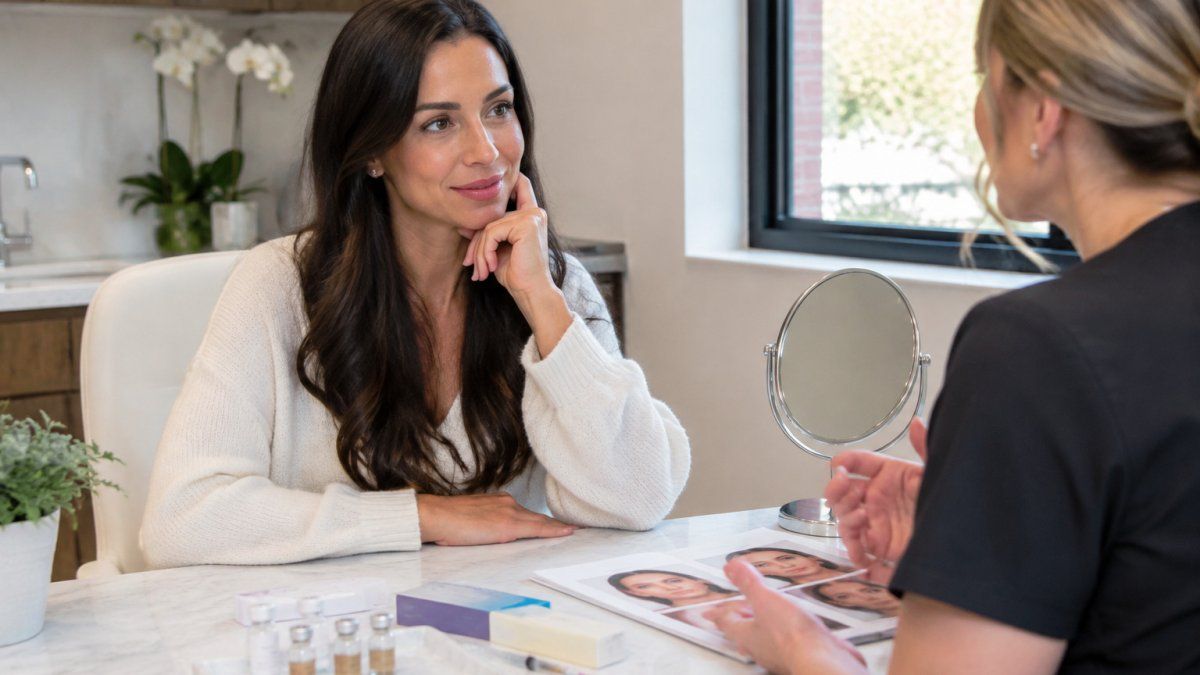
A preventive plan should match your skin, your age, and your budget, not a trend cycle. At Selah Aesthetics and Wellness, every patient starts with Selah Face Value, a head-to-toe consult with AURA facial analysis and a layer-by-layer assessment of bone, fat, muscle, and skin. We assess rather than price by the area, and we will tell you when a treatment isn't right for you.
If you want to go deeper on the preventive mindset, read why preventive anti-aging care beats correction later.
Frequently Asked Questions
Is 40 too late to start retinol?
No. Retinol still improves texture, tone, and fine lines at 40 and beyond, though results take longer than they would have at 25. The key is starting low and slow: a pea-sized amount of a low-strength formula two nights a week, building up as your skin tolerates it. Pair it with moisturizer and daily sunscreen, since retinol makes skin more sun-sensitive. If you have very sensitive skin or active rosacea, ask a clinician before starting.
Which skincare ingredients support long-term skin health?
A short list does most of the work: broad-spectrum sunscreen for UV protection, a gentle cleanser, a moisturizer with ceramides or glycerin for moisture retention, and a retinoid for cell turnover. Peptides and antioxidants like vitamin C are useful additions but secondary. More ingredients do not mean better results, and stacking too many active ingredients is one of the fastest routes to irritation and a compromised skin barrier.
What is the 4-2-4 rule in skincare?
It is a popular social media framework rather than a clinical standard. The general idea is four minutes of cleansing and prep, two minutes of treatment or mask, and four minutes of massage or hydration. Treat it as a pacing guide, not a rulebook. What matters for preventive skincare is consistency and the right products, not the clock. A simple routine done daily outperforms an elaborate one done occasionally.
When should you consult a dermatologist about a skincare concern?
See a professional for a new or changing mole, persistent redness or breakouts that do not respond to over-the-counter care, sudden dryness or sensitivity, or deep lines and volume loss you want to address beyond topicals. At a practice like Selah Aesthetics and Wellness, a consultation includes a full facial assessment so recommendations match your skin, not a generic template. Bring your current product list so nothing gets duplicated or overdone.
Your skin will age. The question is how well you protect it along the way. If you want a routine built around your actual skin rather than guesswork, Selah Aesthetics and Wellness can help. Our team offers personalized treatment plans, care from licensed healthcare professionals, and honest guidance about what you need and what you don't. Get started with Selah Aesthetics and Wellness and build a plan that protects your skin for decades.

Lauren Hodge, MSN, FNP-C, is a board-certified Family Nurse Practitioner and aesthetic injector in Columbus, GA, with advanced training in regenerative medicine and aesthetics. She combines her background in pediatrics, pain management, and orthopedics with a passion for natural results, helping patients look and feel their best.
Share This Blog