How Botox Can Soften Jowls and Neck Sagging

Editorial Team - MSN, FNP-C
Last Updated: October 26, 2026
Quick Summary
Jowls Botox can soften jowls and neck sagging when muscle pull is the main cause, because it relaxes the platysma and DAO muscles. It does not tighten skin or restore lost volume, so results depend on whether muscles drive the sagging.
- Botox relaxes muscles, and jowl sagging comes from muscle pull, skin laxity and fat shifting.
- Neck Botox targets the platysma and DAO in small, precise doses.
- Botox does not tighten skin or restore volume, so it works best as part of a broader plan.
- Your provider grades the concern as dynamic, static or mixed to guide the recommendation.
Table of Contents
- How Botox Can Affect Jowls and the Jawline
- How Neck Botox Works on the Platysma and DAO
- Botox for Platysmal Bands and Vertical Neck Lines
- Botox for Loose Neck Skin: What It Can and Cannot Do
- Botox vs Filler for Jowls: Choosing the Right Approach
- Step-by-Step: What the Treatment Journey Looks Like
- Booking Your Consultation to Find Out If You're a Candidate
- Frequently Asked Questions
How Botox Can Affect Jowls and the Jawline
Many people ask whether jowls botox can help. Botox works differently than many people expect. It relaxes muscles, and muscles are only part of the story. Jowl sagging comes from a mix of muscle pull, skin laxity and fat shifting over time.
How Neck Botox Works on the Platysma and DAO
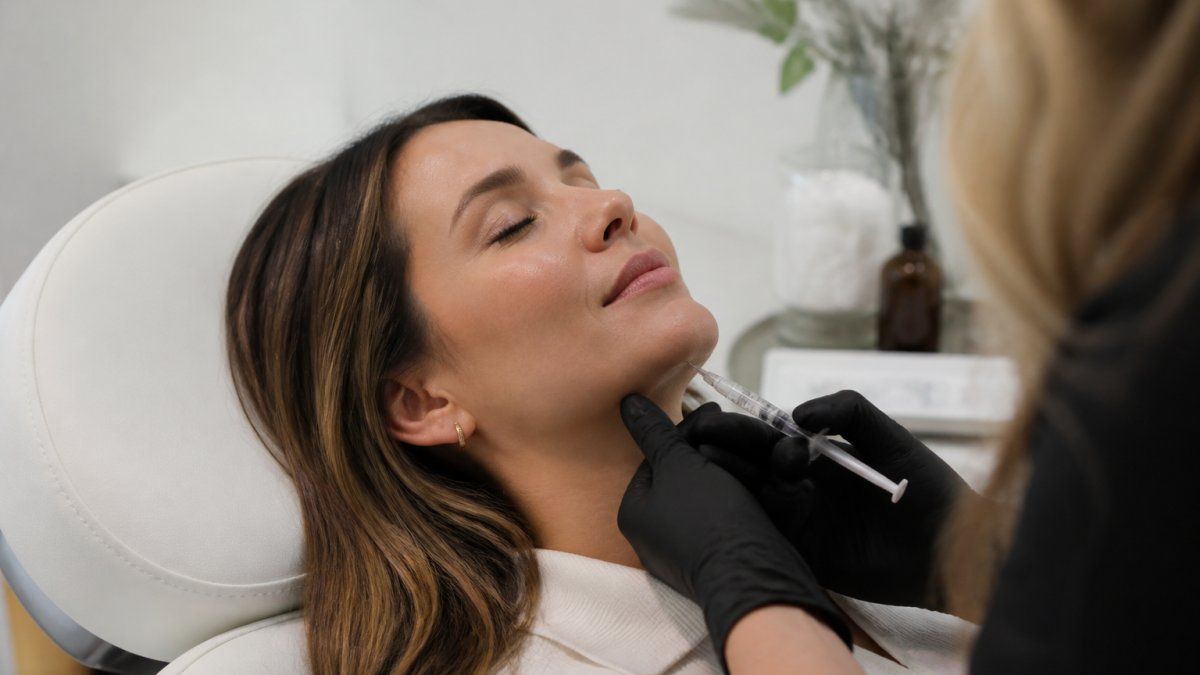
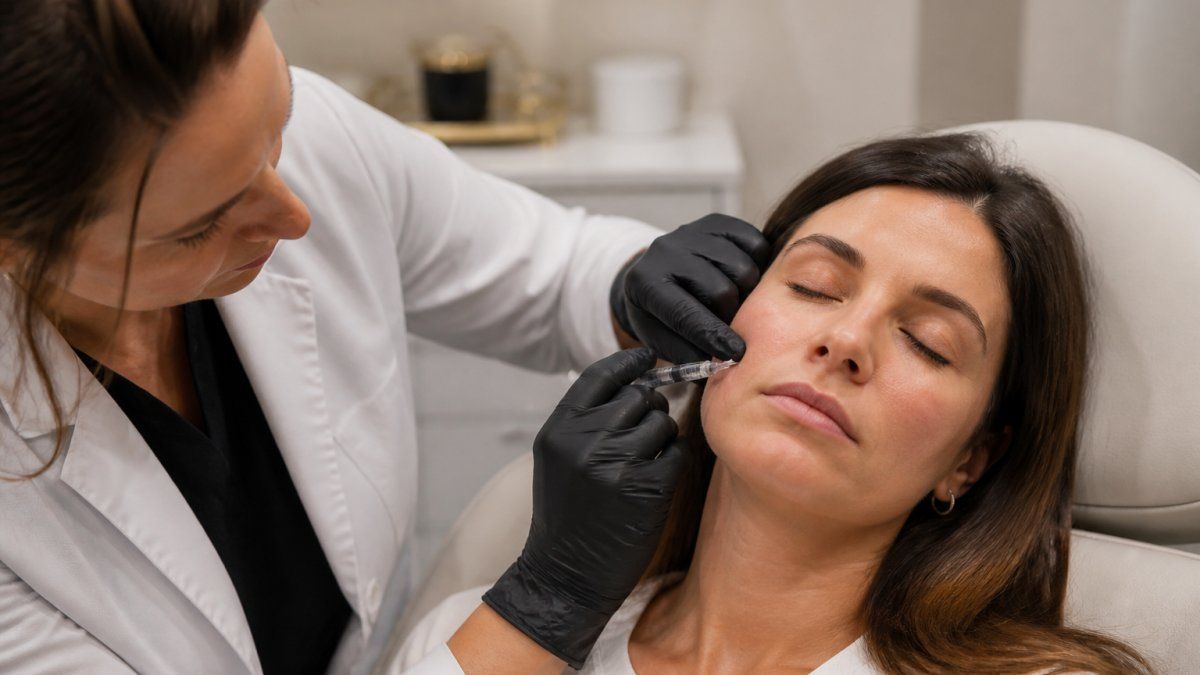
Neck Botox targets these muscles in small, precise doses. Your provider will decide which areas to treat based on how your face moves and how it is built. Results depend on careful assessment, not a one-size-fits-all plan.
Botox for Platysmal Bands and Vertical Neck Lines
Common ways to think about these lines:
- Dynamic lines: Appear with movement and often respond well to Botox.
- Static lines: Stay visible at rest and may need additional treatment.
- Skin texture: Surface changes often call for skin-focused treatments.
Botox for Loose Neck Skin: What It Can and Cannot Do
Realistic expectations matter here. Botox can improve the look of the neck in some cases, but it works best as part of a broader plan. Your provider can explain whether it fits your goals.
Botox vs Filler for Jowls: Choosing the Right Approach
Botox and dermal filler solve different problems, and the right choice starts with identifying what is actually causing the jowling. A simple framework helps: separate the concern into muscle pull, volume loss, and skin laxity, then match the treatment to the dominant driver. Readers weighing whether neurotoxin is worth it can find a candid breakdown of costs and results.
A quick self-assessment framework
Most people are a mix of all three, which is why a single product rarely delivers a full result.
How the main options compare
| Approach | Best for | What it does | Typical duration | Downtime | Key limitation |
|---|---|---|---|---|---|
| Botulinum toxin (Botox, Dysport, Xeomin, Jeuveau) | Muscle-driven jowling and platysmal bands | Relaxes platysma and DAO to reduce downward pull | About 3-4 months | Minimal; avoid exercise and rubbing for ~24 hours | Does not tighten skin or restore volume |
| Hyaluronic acid filler | Volume loss and jawline definition | Adds structure and projection | Roughly 6-18 months depending on product and site | A few days of swelling or bruising | Does not relax muscle; overfilling can look heavy |
| Energy-based devices (RF, ultrasound, laser) | Mild to moderate skin laxity | Stimulates collagen remodeling | Gradual, often months; maintenance varies | Usually a few days of redness or sensitivity | Results are modest and build slowly |
| Threads | Mild lifting in selected patients | Mechanical support under the skin | Variable; often months | Bruising and swelling for several days | Not a substitute for a facelift; patient selection is narrow |
| Surgery (facelift, neck lift) | Significant laxity and deep tissue descent | Repositions tissue and removes excess skin | Years | Weeks | Invasive; anesthesia and surgical risks |
How to decide
At Selah Aesthetics and Wellness, every patient starts with Selah Face Value, a head-to-toe consultation with AURA facial analysis and a layer-by-layer assessment of bone, fat, muscle and skin.
Step-by-Step: What the Treatment Journey Looks Like
Most practices follow a predictable sequence, and knowing it in advance removes much of the uncertainty. The timeline below reflects a common pattern; your own schedule may compress or stretch depending on your anatomy and goals.

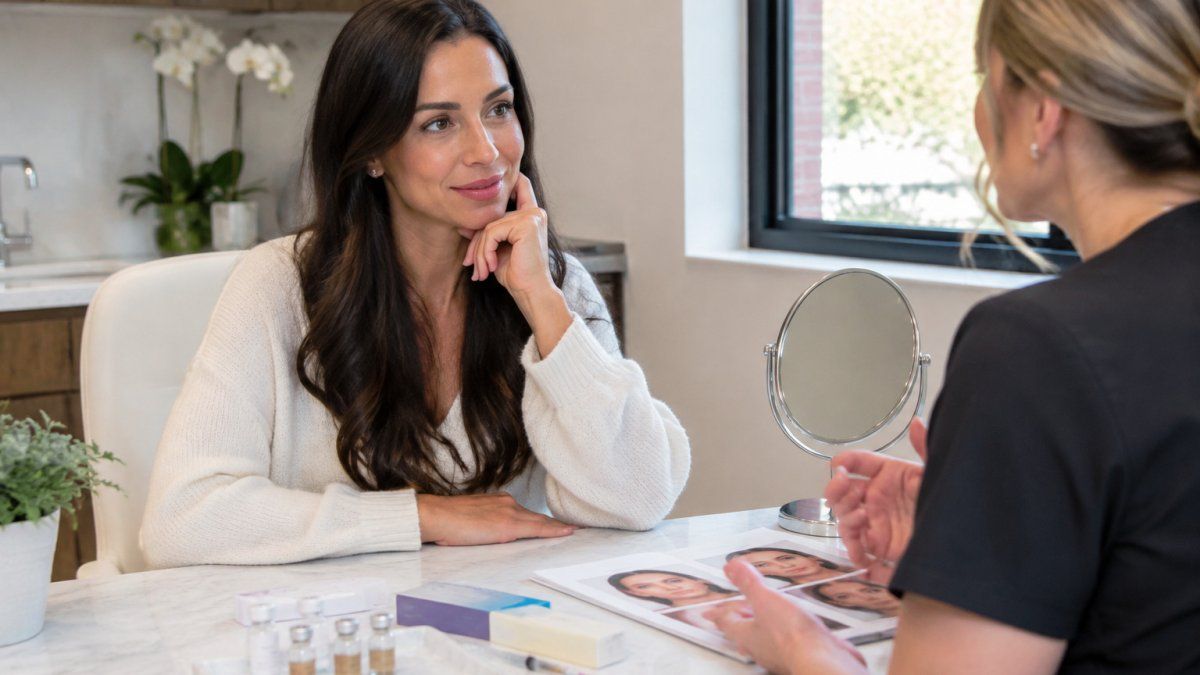
1. Consultation and candidacy screen
Your provider reviews your goals, medical history, and facial anatomy. This is also when contraindications are checked. Botulinum toxin products carry boxed warnings and labeling that list precautions for people with certain neuromuscular disorders (such as myasthenia gravis or Lambert-Eaton syndrome), known hypersensitivity to the product or its components, and infection at the planned injection site. Pregnancy and breastfeeding are commonly treated as reasons to defer. Bring a full medication list, including antibiotics, blood thinners, and any muscle relaxants, because some can raise bruising risk or interact with the toxin.
2. Movement and tissue assessment
Your provider asks you to clench, smile, and frown so the platysma and DAO can be evaluated in motion. They also assess skin quality and volume, because Botox addresses muscle pull, not laxity or fat loss. A common pattern is to grade the concern as primarily dynamic (appears with movement), primarily static (visible at rest), or mixed, because that grade drives the recommendation more than the label "jowls" does.
3. Treatment plan and consent
You receive a written plan: which muscles, roughly how many units, expected effect, alternatives, and what the provider does not recommend. Ask what the plan will not fix, that answer is often more useful than the plan itself.
4. Injection appointment
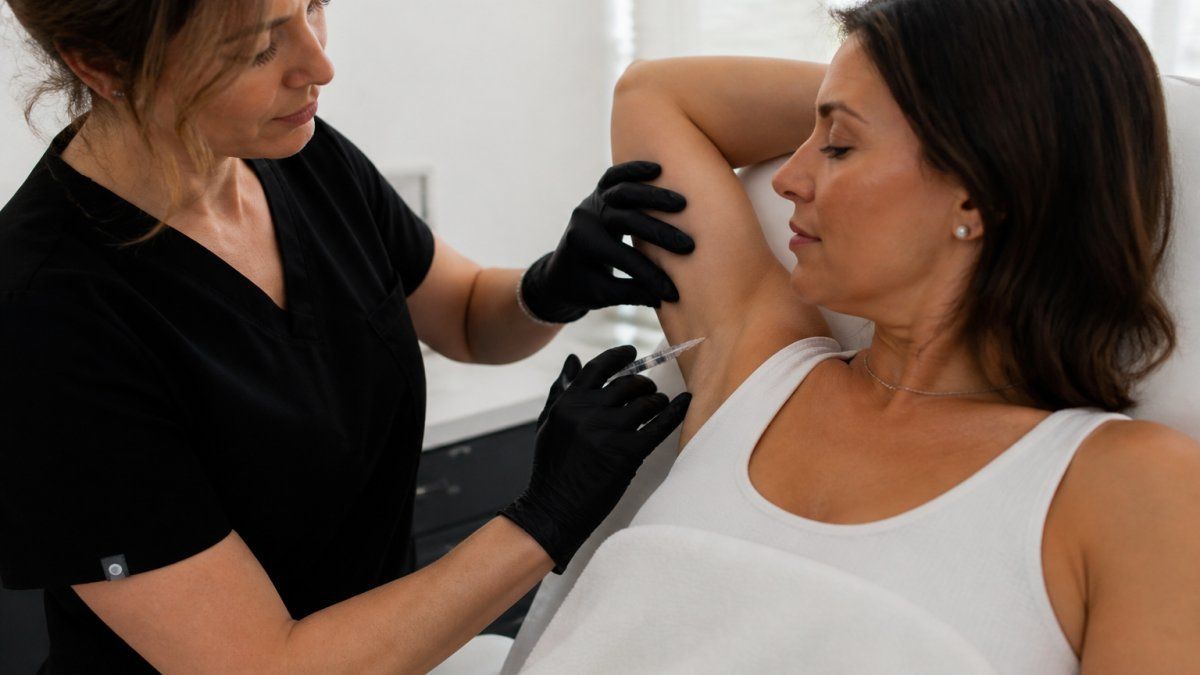
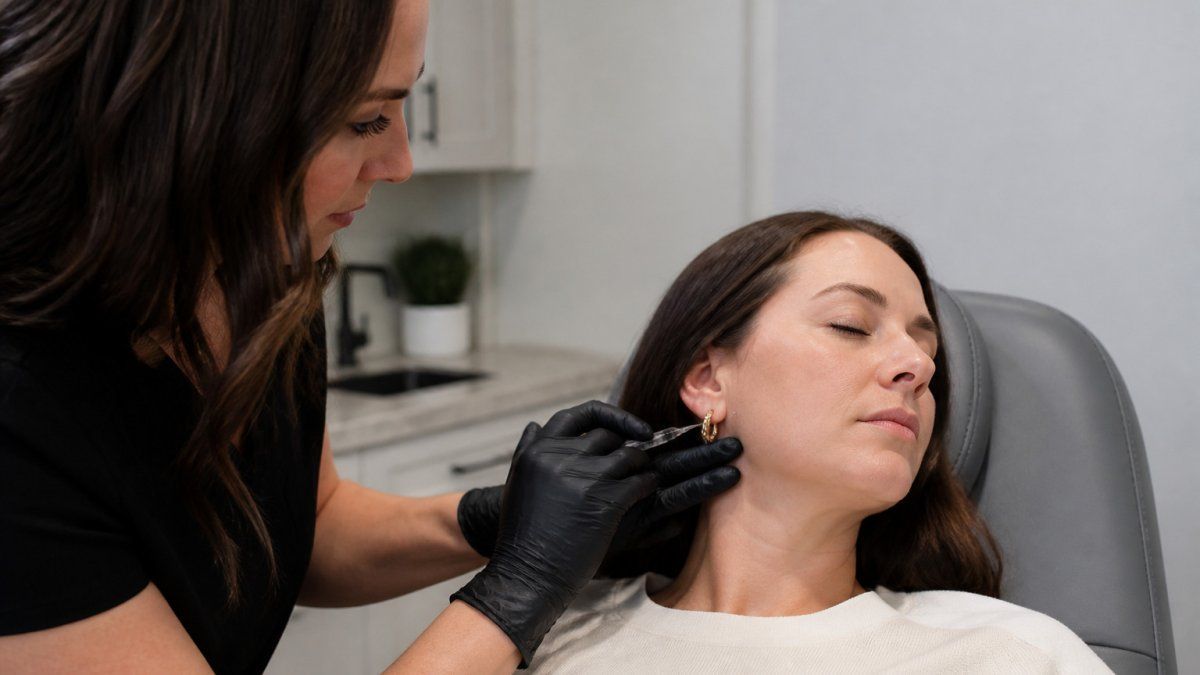
Sessions are typically brief, often 15 to 30 minutes for lower-face and neck areas. To understand the real risks of injectable treatments before committing, read our overview of possible side effects. Small aliquots are placed in targeted spots. Most people describe the sensation as brief pinches; no sedation is usually needed. Ice or a topical numbing agent may be offered.
5. Immediate aftercare
Common instructions include staying upright for a few hours, avoiding strenuous exercise, rubbing, or massage of the treated area for about 24 hours, and skipping saunas or hot yoga the same day. These steps are intended to reduce the risk of the toxin migrating beyond the intended muscles. Mild redness, swelling, or pinpoint bruising at injection sites is common and usually settles within a few days.
6. Early results and full effect
Changes often begin within several days, but the full effect typically builds over about two weeks. This is why most providers ask you to judge the outcome at the two-week mark rather than on day one. If the result is asymmetric or underwhelming at that point, a small touch-up may be considered.
7. Follow-up and maintenance
A follow-up around two weeks lets your provider compare movement before and after and adjust the next plan. Results are temporary. A common pattern is repeat treatment every three to four months, though timing varies with dose, muscle strength, and individual metabolism. Some people gradually extend the interval; others find their sweet spot and stay there.
Booking Your Consultation to Find Out If You're a Candidate
At Selah Aesthetics and Wellness, every patient starts with Selah Face Value, a head-to-toe consultation with AURA facial analysis and a layer-by-layer review of bone, fat, muscle and skin. We will say no when a treatment isn’t right.
[page:1]
[page:4]
[page:2]
[page:3]
Frequently Asked Questions
Can Botox help with jowls?
Will Botox make my face look frozen?
How long do neck Botox results last?
Is Botox a good alternative to surgery?
How do I know if I'm a candidate? Book a consultation at Selah Aesthetics and Wellness.
Frequently Asked Questions
Can Botox lift a jowl?
Botox does not lift tissue the way a surgical facelift does. It relaxes the muscles that pull the lower face and neck downward, such as the platysma and depressor anguli oris (DAO). When that downward pull is reduced, the jawline may look more defined and the lower face may appear less heavy. The effect is a softening rather than a lift, and results depend on whether muscle activity is a major contributor to the jowls. A consultation with a qualified injector can help determine whether that is the case for you.
Will Botox help loose skin on my neck?
Botox can relax muscle bands in the neck, which may smooth the look of vertical lines. It does not tighten loose skin or restore lost collagen. If the main issue is skin laxity or volume loss, other options such as dermal filler, collagen-stimulating treatments, or energy-based devices may be more suitable. Many people benefit from a combination approach, and an in-person assessment is the best way to sort out which factors apply.
How long does Botox for the neck last?
Botox effects typically begin to appear within several days, with the full result often visible around two weeks after treatment. Results generally last several months before muscle activity gradually returns. Duration varies by individual, dosage, and treatment area. Your injector can discuss a realistic timeline and whether maintenance treatments are appropriate for your goals during your consultation.
What are the risks of Botox injections in the neck?
Botox is a prescription medication, and neck injections carry risks that should be discussed before treatment. Possible side effects include temporary bruising, swelling, tenderness at injection sites, and headache. Less common effects can include drooping or asymmetry if product spreads to unintended muscles, and swallowing or voice changes are rare but possible with neck treatment. Treatment is not appropriate for everyone, including people who are pregnant or breastfeeding or who have certain neuromuscular conditions. A thorough medical history review is an important part of safe care.

Lauren Hodge, MSN, FNP-C, is a board-certified Family Nurse Practitioner and aesthetic injector in Columbus, GA, with advanced training in regenerative medicine and aesthetics. She combines her background in pediatrics, pain management, and orthopedics with a passion for natural results, helping patients look and feel their best.
Share This Blog